
Owning your first car is unforgettable. What if that car was an iconic model purchased right as it made its debut on Indian roads? That’s exactly my story, and I’m eager to share it before the details fade from memory.

In 1983, my father-in-law, Mr. K.M. Antony, Kadavil, Ruby Nagar, Changanacherry, booked the Maruti 800 when it was first launched in India, by paying an advance of ₹10,000. Demand was overwhelming, and allotments were made through a lottery system, so we waited with excitement and anxiety. This period also coincided with another joyful expectation, our first child. Our son arrived in January 1984, and just a month later, we received a letter from Maruti Udyog Limited confirming the car’s delivery at Popular Motors, Trivandrum.
I joined my father-in-law and brother-in-law to take delivery of this new car, an entirely fresh entrant on Indian roads. At the showroom, we watched in awe as the cars were being unloaded from a truck that had brought them all the way from Delhi. Back then, it was common for new cars to be driven across long distances from the factory to the dealership. I even remember a cousin of mine traveling to Calcutta with friends to drive back an Ambassador on taking delivery there.
Maruti 800 looked small from the outside, but felt surprisingly spacious once inside. The bucket seats and the floor-mounted gear shift, replacing the old steering column shifter, were all new experiences for us. The cost of the Maruti, including the advance, was ₹54,000. I had the honour of driving it home, and along the way, passersby would stop and stare at this rare, compact machine; it was the first time many were seeing one.
By Indian standards of that time, the Maruti 800 seemed tiny. With Ambassadors boasting 1800cc engines and Fiats around 1200cc, the Maruti’s 800cc raised eyebrows. Some jokingly called it a matchbox car and claimed that a passing KSRTC bus might blow it off the road! But despite its size, we can proudly say that the car defied all doubts; it carried seven of us, my wife’s entire family, and me on many long journeys.
What we remember most is taking our three children to my wife’s family home on the other side of town on our Chetak scooter. By late evening, all three would be fast asleep. We folded down the Maruti’s back seat to create a makeshift bed for them. Many times, we brought them back home peacefully, sleeping in the back seat bed.
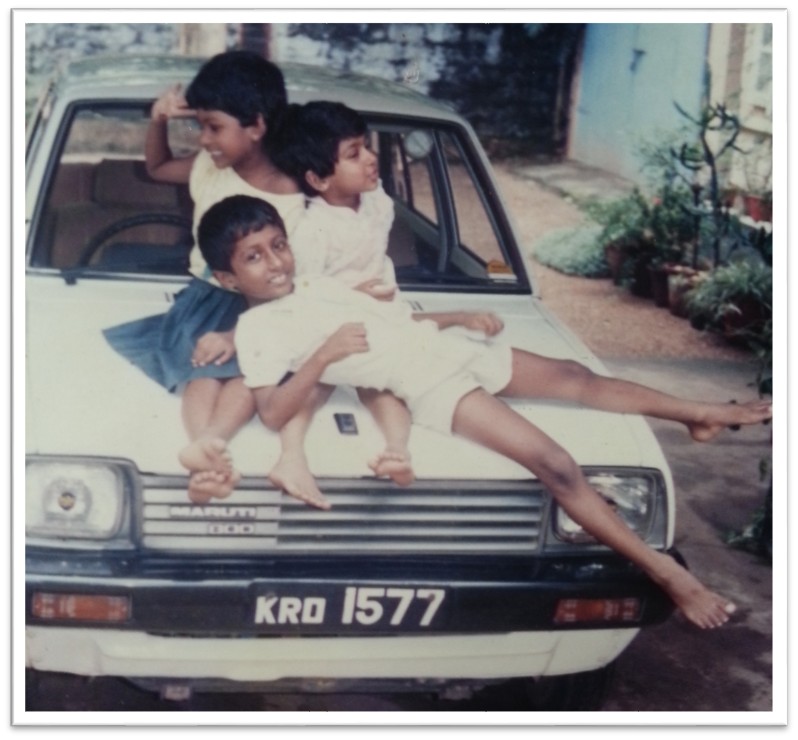
The children found it just their height and at times got on playfully on its bonnet.
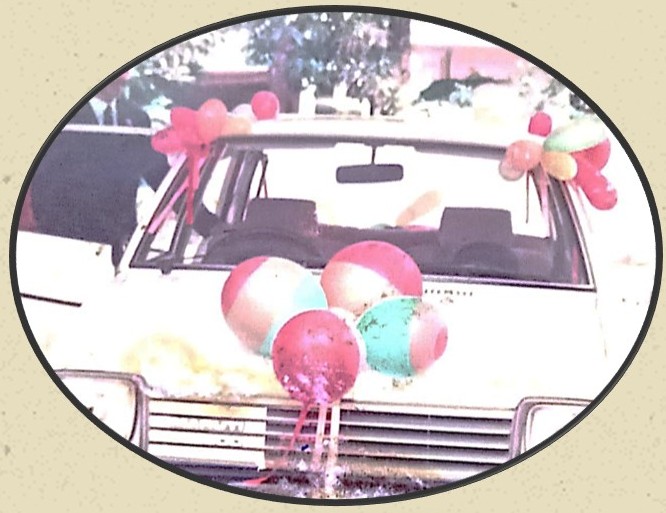
A momentous occasion for the family was my brother-in-law’s wedding, when our Maruti 800 was beautifully decked up—a rare and eye-catching sight in 1989.
By 1992, my in-laws had upgraded to the newly launched Maruti Zen. I offered to take over the Maruti 800 on the condition that I pay its market value, ₹90,000. [167% of the original price after 8 years!] And so, this car became our family’s very first car. If you were wondering about the connection to my in-laws’ car, there’s your answer. Our first car was a second-hand one, but one we had known it since the day it was booked. It felt more like a hand-me-down than a used vehicle.
The original Maruti 800 had all its parts made in Japan, proudly engraved as such. It served us faithfully for over a decade. By the late 1990s, we booked a new Maruti 800. When it came time for delivery, I consulted an insurance agent I knew to get the papers ready. Surprisingly, he advised against purchasing the new model, claiming the original, built entirely with Japanese components, was superior to the newer, Indian-made versions.
There were eager buyers for just the delivery documents of the new car, and we sold them at a premium. The extra money helped us buy our first fully automatic washing machine.
However, by the year 2000, our beloved Maruti 800 had begun to show its age, with several components requiring replacement. In 2001, we finally decided to move on and brought home a Maruti Zen. Our continued trust in the brand stands as a testament to the saying: “Those who have experienced Maruti are more likely to remain loyal to it.”
Even so, the memories of our Maruti 800, an icon with all-Japanese parts, remain deeply etched in our hearts.
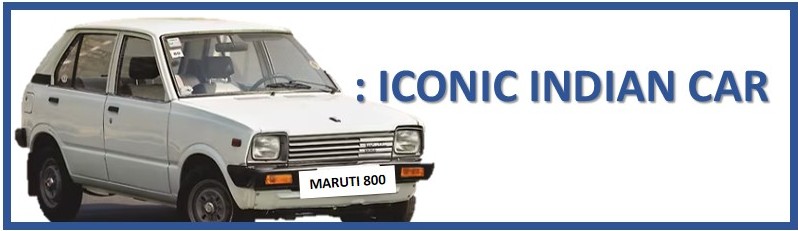
The Maruti 800 holds a place of national significance in India, much like the Ford Model T did in early 20th-century America and the Volkswagen Beetle in post–World War II Europe.
Conception:
Sanjay Gandhi, the younger son of Indira Gandhi, the third Prime Minister of India, was known for his deep passion for automobiles. He was trained as an apprentice with Rolls-Royce in the UK, and upon his return in 1968, he launched an ambitious automotive project, an indigenous car. In 1971, he founded Maruti Motors Limited, named after Lord Hanuman, also known as Maruti, meaning son of the wind in Hindu mythology.
Project aborted: The company acquired 297 acres of land in Gurgaon, and by 1972, the first prototype of the Maruti car was completed. An industrial license followed in 1974. However, the company struggled to begin production as initially envisioned. Sanjay Gandhi’s increasing political involvement during the Emergency further hindered progress.
Following Indira Gandhi’s electoral defeat in 1977, a court ordered the dissolution of Maruti Motors in 1978, casting serious doubt on the future of the project. And in 1980, after Indira Gandhi returned to power, Sanjay Gandhi tragically died in a plane crash.
Re-conception: His untimely death strengthened her resolve to fulfill his dream of creating an affordable, indigenous car for the common Indian. The Government of India stepped in and, through legislative intervention, established a new public sector entity, Maruti Udyog Ltd (MUL) in 1981, to build cars for the masses. Indira Gandhi’s approach was a significant departure from the government’s traditionally socialist policies; she made calculated exceptions, driven by the larger vision of the car project.
The government brought together some of the most capable minds from the public sector, though none had experience in building a car company. At the helm were V. Krishnamurthy as Chairman and R.C. Bhargava as Director of Sales and Marketing. They searched the globe for a suitable international partner.
While global auto giants like Fiat, Peugeot, Volkswagen, Renault, and Nissan rejected the proposal, convinced that India’s undeveloped automobile market held little promise, a relatively unknown Japanese company, Suzuki, saw potential. Eager not to miss the opportunity, Suzuki quickly signed a joint venture agreement in 1982, acquiring a 26% stake against the 40% demanded by the government of India, due to limited capital within the company and the risks involved in the venture.
Delivery with the shortest gestation period: In a remarkable feat, a brand-new factory, along with a complete supply chain, dealership, and distribution network, was set up in just 14 months, an unbroken record in India. In a country where people had long been limited to outdated and bulky models like the Ambassador and Fiat, the Maruti 800 brought a breath of fresh air. When bookings opened in April 1983, more than 1.2 lakh people paid ₹10,000 in advance, creating a waiting period of nearly three years. The lottery method was used to decide the allotment of the car.
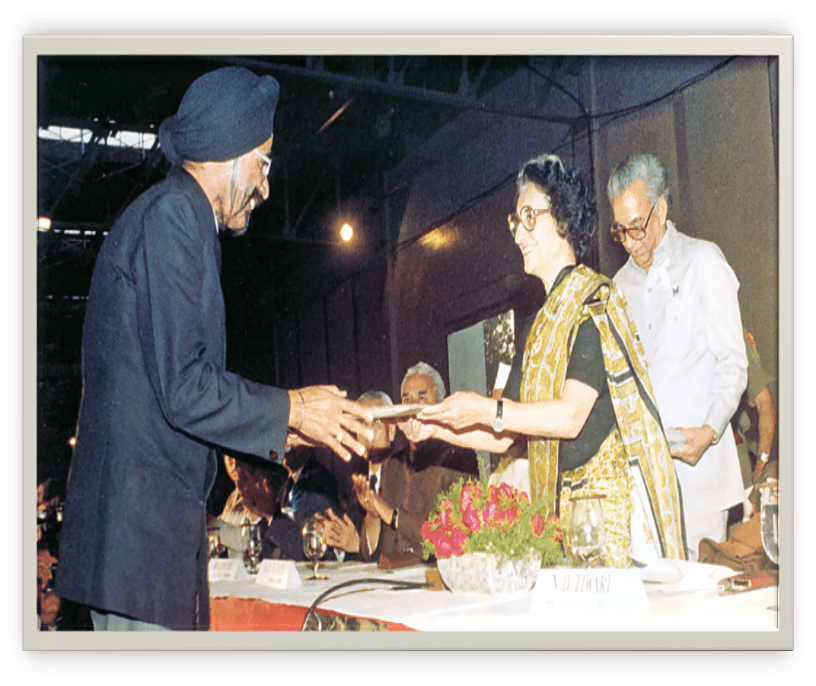
On December 14, 1983, Sanjay Gandhi’s birth anniversary, Prime Minister Indira Gandhi handed over the keys to the first batch of Maruti 800s.
Phenomenal Growth of Maruti
The Maruti 800 rapidly captured the hearts of both the affluent and the common man. Its reliability, low maintenance needs, and the backing of Maruti’s extensive dealer and service network made it a household name across India. More than just a car, the Maruti 800 symbolized the dawn of a new era in the Indian passenger vehicle industry.
With its Japanese management principles and process-driven approach, Maruti played a transformative role in modernizing India’s industrial ecosystem, setting new benchmarks for product quality and operational efficiency.
The company’s remarkable journey is reflected in its cumulative production figures. By 2014, when production of the Maruti 800 ceased to make way for the Alto, Maruti had manufactured 27 lakh (2.7 million) units of the model over three decades. This milestone stands as a testament to its phenomenal growth and enduring popularity.

Suzuki Motor Corporation gradually increased its stake in the company over the years, rising to 40% in 1987, 50% in 1992, and eventually reaching 56.4% by 2013. In 2007, the company officially changed its name from Maruti Udyog Limited (MUL) to Maruti Suzuki India Ltd (MSIL). The government of India divested its stake in the company. Thus, the erstwhile successful Public sector enterprise is now a subsidiary of Suzuki Motor Corporation, Japan.
Over the years, MSIL introduced a wide range of models, 18 in total so far, with the latest addition being the Vitara EV. The company continues to be the leader in the passenger car industry, which is fast growing in demand and in the number of offerings by players from across the globe.
The Maruti 800 continues to live on in public memory as the quintessential people’s car. Even with the emergence of competitors like the Tata Nano, it retained its status as the undisputed number one vehicle for the masses.
Stories within the Story
Maruti’s story is woven with many powerful narratives: personal, familial, national, industrial, and international.
- The dream of a young man to revolutionize Indian roads, tragically cut short in the skies.
- A mother’s enduring love and determination to fulfill her son’s unaccomplished dream after his untimely passing.
- A Prime Minister recalibrating national policy to realise a deeply personal goal.
- A public sector enterprise that, when guided by a clear vision and genuine collaboration, delivered with remarkable efficiency, setting new records and redefining success.
- A little-known Japanese company taking a bold leap into the uncharted Indian market and becoming the leader in the fast-growing market.
Tailpiece: The intriguing Maruti’s saga remained untouched by Kangana Ranaut, the story writer, actor, and co-producer of Emergency, the Bollywood biopic on Indira Gandhi. Perhaps it’s being reserved for a future project or left for someone else to explore.

You may also be interested in viewing a related blog.


 Stephen Musings
Leave a reply to Jerry Mukkadan Cancel reply