Stephen Musings

Not on my merit but by His Grace,

ആടുജീവിതം: THE NOVELLA & THE MOVIE

The news of ആടുജീവിതം triggered memories of my childhood, a time when my father took me and my siblings to the cinema. Affectionately known as Mathachen, my father, M.S. Mathew, managed our family’s provision shop in the Changanacherry market. Despite his bustling schedule, he always found moments to delve into books borrowed from the municipal library and the esteemed ‘Mathrubhoomy’ weekly.

He had a refined taste, ensuring that we caught movies adapted from the novels he had read during their premiere week. Interestingly, during those days, Changanacherry wasn’t a centre for film releases, so we travelled to Tiruvalla or Kottayam to watch these films. We attended the second show at 9:00 pm to accommodate his return from the shop. As children, we simply reveled in the movies, unconcerned with Achachen’s comparisons between the films and their original novels. These films, born from renowned books and novels, often became massive hits at the box office. Titles like ഉമ്മാച്ചു, ഓടയിൽനിന്ന്, പണിതീരാത്ത വീട്, ഓളവും തീരവും, ചെമ്മീൻ, അരനാഴികനേരം remain fresh in our memories. Such were the evenings of our cinematic adventures, shaped by our father’s deep literary passions.
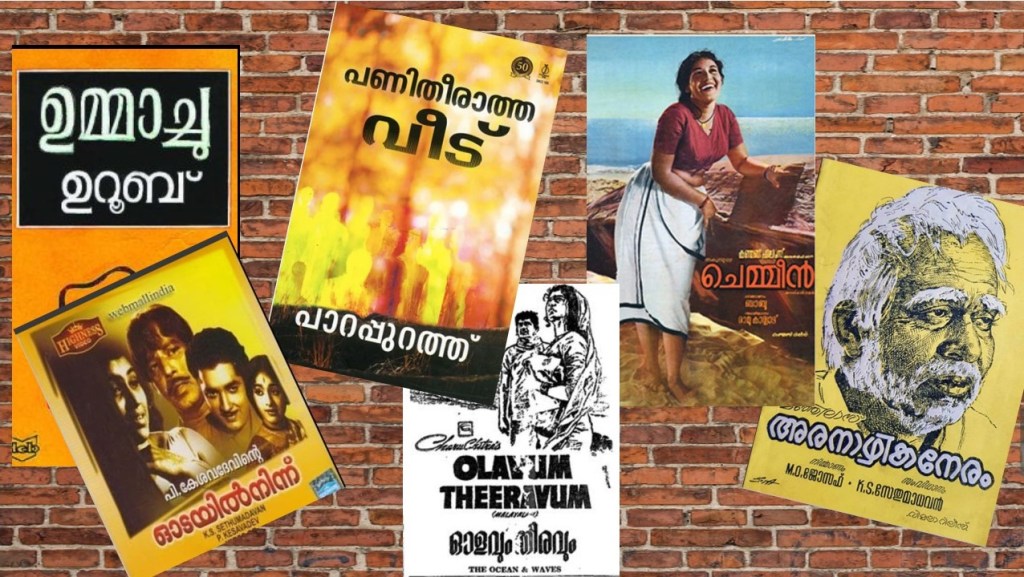
In recent years, the frequency of movies adapted from books or novels has noticeably declined. Instead, the majority of films are based on scripts tailored specifically for the cinema, often centered on mega stars or popular actors. This shift may have been influenced by a scarcity of available literary source material, coupled with the increasing number of films being produced. Unfortunately, this transition has resulted in a loss of depth in character portrayal and the detailed depiction of the story’s time and environment.

The film ആടുജീവിതം emerged after a prolonged gap as an adaptation of a book authored by Benyamin in 2008. Spanning 255 pages, it lies between the realms of a short story and a novel and is termed a novella. Benyamin himself has acknowledged that it is 30% based on the real-life story of Najeeb Mohammed. The narrative follows a Kerala emigrant to Saudi Arabia, lured by dreams of prosperity in the Petro-rich Middle East, only to find himself enslaved by a brutal Arab, herding goats in the Saudi desert. The book, originally written in Malayalam, has gone through 100 reprints and has gained immense popularity both within and beyond Kerala, with numerous translations. The book has received prizes and awards, both national and international.
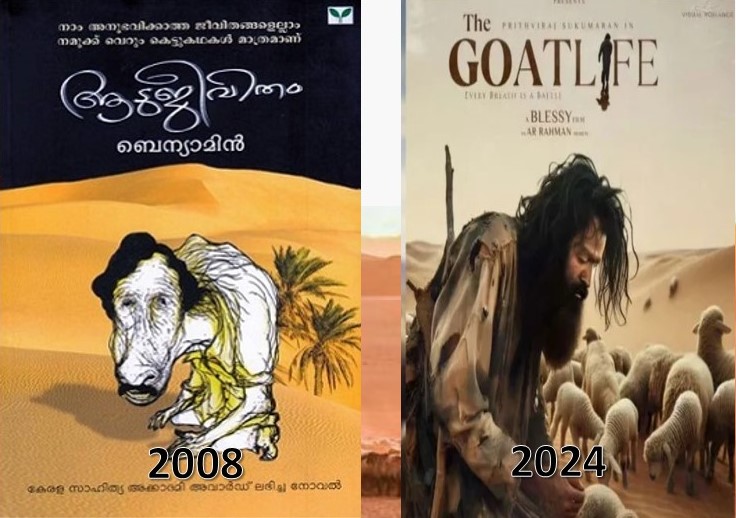
Book Vs Movie: In a novel/novella, readers are guided through the era, setting, and characters, allowing for vivid imaginations. However, in a film adaptation, the director’s interpretation dictates the visual representation, potentially deviating from both the author’s original vision and that imagined by readers. The conversion from novel/novella to film often leaves little to the imagination of the viewers. I came across a few who have read ആടുജീവിതം, the novella, but will refrain from watching the movie. Their rationale is that viewing the film might force them to replace the vivid visuals they have in their minds.

While the record-breaking success of the film indicates its commercial triumph, it does not necessarily answer whether the film aligns with the visualizations of its readers. Reviews of the movie often offer subjective opinions and lack direct comparison to the source material. A survey among those who have experienced both the book and the movie could provide valuable insights into the movie’s success in capturing the essence of the original story.

The movie reflects the quintessential Malayalee archetype: the determined seeker of fortune or means of survival. Kerala Diaspora is scattered across the globe, estimated at 2.1 million according to the Kerala Migration Survey 2018, with nearly 90% residing in Gulf countries, where the plot of ആടുജീവിതം enfolds. Despite claims of growth and progress by the country and the state, the number of migrants has increased considerably in recent years. Their focus has shifted towards the West—specifically the USA, Canada, Europe, and the Far East—Australia and New Zealand. This trend is primarily observed within the educated middle class. One notable trait of Malayalees is their remarkable capacity for adaptation and assimilation. Despite initial challenges in unfamiliar territories, most eventually overcome these hurdles through gradual adaptation. However, a few ultimately experience circumstances, in varying degrees, to what Najeeb encounters in ആടുജീവിതം.

The success of the film at the box office, and hopefully in global ratings as well, will serve as a testament to the quality of original writers on one side and the resilience, adaptability, and survival instincts of these migrants on the other.

May this unprecedented success mark the beginning of a new era for novelists and authors, increase in number of readers, and for their works to be adapted into world-class films.

11 responses to “ആടുജീവിതം: THE NOVELLA & THE MOVIE”

  1. Roy Jacob

    “WoW!!
    Great piece of writing.

    I read ആടുജീവിതം, the novel many years back. And watched the movie first day first show in Chennai with my wife.

    I have met many Najeebs when I spent five years in Jeddah with Saudi British Bank.

    The intense stories I have heard from Malayalis duped into slavery in Saudi deserts can NEVER be captured by Benyamin or Blessy. It’s soul killing narratives that I have heard from victims.

    In that sense I agree that Benyamin could capture only 30 percent of Najeeb’s story.

    And Blessy could capture may be 30 percent of Benyamin’s story.

    The movie is however very thought provoking.”

    Like

  2. James Manimala

    ” സ്റ്റീഫൻ സാർ ,
    വിലയിരുത്തലും വിശകലനവും അസ്സലായി..
    ‘ ചെമ്മീൻ മുതൽ ആടുജീവിതം ‘ വരെ എന്ന് തുടക്കത്തിൽ ഒരു സബ്ഹെഡിങ് ആവാം.”

    Like

  3. Upon my achachan’s recommendation, I dived into “Aadu Jeevitham.” Uncertain of what it held, I embarked on the journey while on a train. As a Maamoodan with a penchant for artistry, I found myself immersed in its narrative, living each moment depicted within its pages. The profound impact it left on me carved a deep scar, prompting gratitude for every challenge life had thrown my way. Recently, I revisited it in anticipation of the movie adaptation. However, despite the film’s visual grandeur and music, I couldn’t find the same depth as in the book. Instead, my admiration lies with the portrayal of three pivotal characters: Najeed (played by Prithviraj), Khadri (portrayed by Jimmy Jean Louis), and Hakim (enacted by Gokul). Their performances painted a vivid picture of “Goatlife,” surpassing my expectations with their transformative scenes. Prithviraj, in particular, shines brightly, reminiscent of Tom Hanks in “Cast Away.” Blessy, the director, emerges as an unsung hero, crafting a film that truly does justice to Malayalam cinema, a source of pride for its viewers.

    Like

    1. Naveen,

      thank God, that you are the link to continue the passion for books into the third generation from your father, CA Scaria Mathew (Josekutty)

      Like

  4. I read this book twice,first in 2011 and later in 2020.I may not see this film as I have my own film on Najib and the desert.Adaptions in Malayalam are going down just because the mindset of viewers has changed and can’t be brought back.It is good that Blessy decided to film this as the message would reaches innumerous people who have not read this yet.Aadujeevitham is the scariest portrait of the gulf life.We have Arabikatha and Pathemari as predicessors.I liked the way your father relished books and cinemas.I hope we are living in a state with umpteen literary and cinematic works which can keep one going till the end.Salute to your father who gave you a wonderful childhood.

    Like

  5. Adaptation of novel to film is a big task. One needs a very good script writer
    who can bring the substance of the story in to the screen play. We don’t have
    many such good writers. Most of the successful movies in Malayalam are
    stolen stories from other languages, without even giving an acknowledgement
    to the original.
    Benyamin has been accused of plagiarizing parts of the novel Aadujeevitham
    from Austro-Hungarian writer Muhammad Asad’s The Road to Mecca (1954).
    Critics have quoted at least three paragraphs from both literary works to
    draw direct parallels between them, especially in the descriptions of the
    protagonists’ experiences while traversing the desert.
    I read the book shortly after it was publicized. For those who have lived in the
    Middle East, it will pass of as a routine ordeal of some unlucky laborer. But the
    impact of the story is greater because of the suggestion that it is a ‘true’ story.
    As for the writing, there is nothing exemplary about it; this is more or less a
    straight forward narration of events; it’s not thought provoking and it doesn’t
    stay with you for long after you finish reading it.
    Now a day, it has become almost impossible to decide the quality of a movie
    based on reviews and social media comments. Most of the media reviews are
    manipulated and hyped. You expect something great when you go to watch a
    movie which comes with lots of publicity, and realize you have been taken for a
    ride.
    The book was good, I don’t know about the movie. A colleague of mine went to
    see the movie yesterday and told me that he and his wife were the only
    viewers in the theatre.

    Like

    1. Thanks Dr PT Antony ( Babu) for your straight forward comment on the blog. Makes people think over what they are dished out by the media

      Like

  6. Couldn’t read the novel..and may watch movie when it comes in ott..

    Your blog as usual is very beautiful..

    keep writing…

    Like

  7. Your observations regarding the adaptations of written material - whether short story, novella, novel or anything in between – is absolutely spot on !

    The first couple of James Bond films had sufficient similarities to make them easy with the respective books; as the franchise progressed, only the titles were the same, and later only the main characters had the same names – otherwise even their characteristics were different from the initial stories.

    On the other hand, the film by the name Erin Brockovich is reputed to be 98% similar to the novel and still had a massive success.

    The film “BUTTERFLIES ARE FREE”, is quite recognizable to one who has read the story. “ONE FLEW OVER THE CUCKOO’S NEST” is another such film. “CHARLEY” based on the story Flowers for Algernon, was an exceptionally powerful depiction.

    While there are very may excellent adaptations – a few of which were.accepted as more compelling than the novel, there are any number of films which never managed to grip the audience like the original story.

    Personally, I still prefer anything from good authors, rather than watching movies.

    Like

    1. Joseph, you fully endorse my view that the writers’ ability to make the readers create story in their minds, is in contrast to the directors’ creation of film to depict the story.

      The conflict between the two persists in the minds of those who have experienced both.

      Thanks Joseph

      Like

Leave a comment