
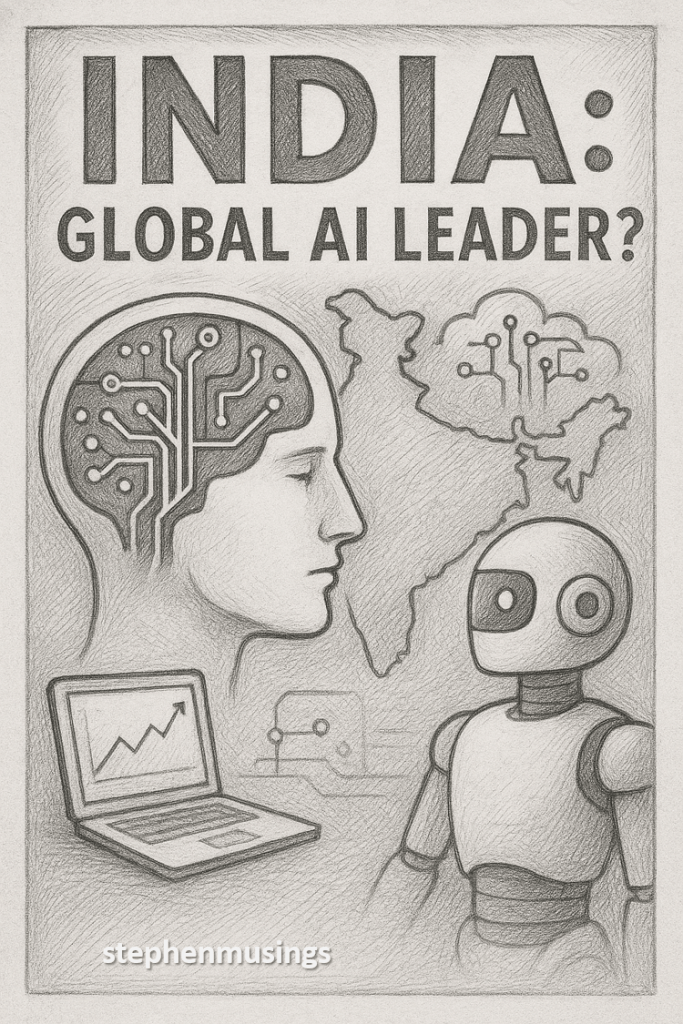
The Economist magazine (17 September 2025) carries an article “AI Erupting in India.” Interestingly, while Altman Sam Altman, CEO of OpenAI cautions against AI global hype, he is strikingly bullish about India. OpenAI’s co-founder calls India’s adoption of AI “unmatched anywhere in the world.” The country is already OpenAI’s second-largest market by users, and could soon be the biggest. In August, OpenAI launched a cheaper version of ChatGPT tailored for India, and plans to open a New Delhi office by the end of 2025. Altman himself is scheduled to visit later this month.
On 18 September, The Economist published an article titled India could be a different kind of AI superpower, offering a fresh perspective on the subject. Citing BCG, a consultancy, it noted that 92% of Indian office workers regularly use AI tools—far higher than the 64% in America. Unlike in richer countries, most Indians believe the benefits of AI outweigh its risks.
The scale of opportunity is staggering. With around 900 million internet users—second only to China—India is uniquely open to American tech. Google’s Android powers over 90% of smartphones, WhatsApp has 500 million active users, and American giants dominate e-commerce through Amazon and Flipkart (owned by Walmart). For U.S. firms already embedded in India’s digital ecosystem, AI adoption could scale at a pace few other markets can match. One example is Perplexity, an AI-powered search engine founded in San Franscisco in 2022 by Aravind Srinivas (of Indian origin). In July, Perplexity struck a deal with Bharti Airtel to provide its $240-a-year service free for one year to Airtel’s 360 million customers. Downloads in India surged nearly 800% month-on-month after the tie-up, dwarfing the AI platform leaders, ChatGPT’s 39% growth and Gemini’s 6%.
Opportunity, or Dependence?
Indian consumers have largely embraced foreign AI firms. Yet concerns linger: What will happen to the country’s IT services industry? Will India become overly dependent on U.S. platforms? These fears have deepened since President Donald Trump imposed steep tariffs on Indian goods.
The deep-pocketed American firms with superior infrastructure could “kill India’s prospects” in AI by discouraging investment in homegrown startups. This could mirror earlier waves of technological change, when Indian companies settled for peripheral services while U.S. counterparts built the core platforms. Despite having one of the world’s largest pools of developers, India still lacks enough world-class AI researchers.
Altman, however, offers a brighter vision: India, he insists, can be “one of the leaders of the AI revolution.”
The Challenging Question
The Economist concludes with a challenge: What kind of AI leader will India choose to be? One that dominates simply by virtue of its massive user base? Or one that builds its own technologies and platforms?
This is the question India cannot afford to ignore. With the world’s largest population of young coders, engineers, and developers, the country has the raw talent to move beyond being just a vast marketplace for foreign AI tools. The real challenge is whether this talent can be directed toward building original platforms, core technologies, and globally competitive products—rather than merely adapting or servicing innovations created elsewhere.
If India limits itself to being a testing ground for American or other foreign companies, it risks repeating the pattern of earlier technological revolutions: remaining a consumer and service provider while others build the platforms of the future. But if it can channel its demographic advantage, entrepreneurial drive, and expanding digital infrastructure, India could transform itself into a true architect of the AI age—shaping global standards, platforms, and breakthroughs.
For that to happen, the task ahead is clear. Policymakers must create a robust ecosystem for AI research, with investments in education, world-class research institutes, and incentives for homegrown startups. Industry leaders must move beyond comfort zones of outsourcing and services, and instead take bold bets on innovation, deep-tech, and intellectual property creation. Public-private partnerships can bridge gaps in funding, infrastructure, and talent development. And India’s vast developer base needs opportunities not just to code for others, but to invent for itself. That gives its firms both the talent and the testbed to create usable, affordable services that do the sorts of things that ordinary people want from AI.
The “India Stack”—India’s digital platform for biometric identification and payments—has already become a model for other countries. Products infused with AI could be the next export of this kind: frugal, scalable innovations pioneered in India but adopted across the developing world. India’s path may not mirror that of America or China, but it could prove no less consequential. For billions in poorer countries, the shape that AI takes may well depend on what happens in India.
To showcase this success globally, India Stack Global has been launched, featuring 15 key projects and platforms such as Aadhaar, UPI, DigiLocker, Aarogya Setu, eSanjeevani, eHospital, and more, with information available in all UN languages. India’s leadership in digital technologies and its experience implementing digital transformation at population scale are increasingly in demand, with several countries requesting its contribution to the Global Digital Public Goods repository. The lessons of India Stack, therefore, stand ready for the world to adopt.
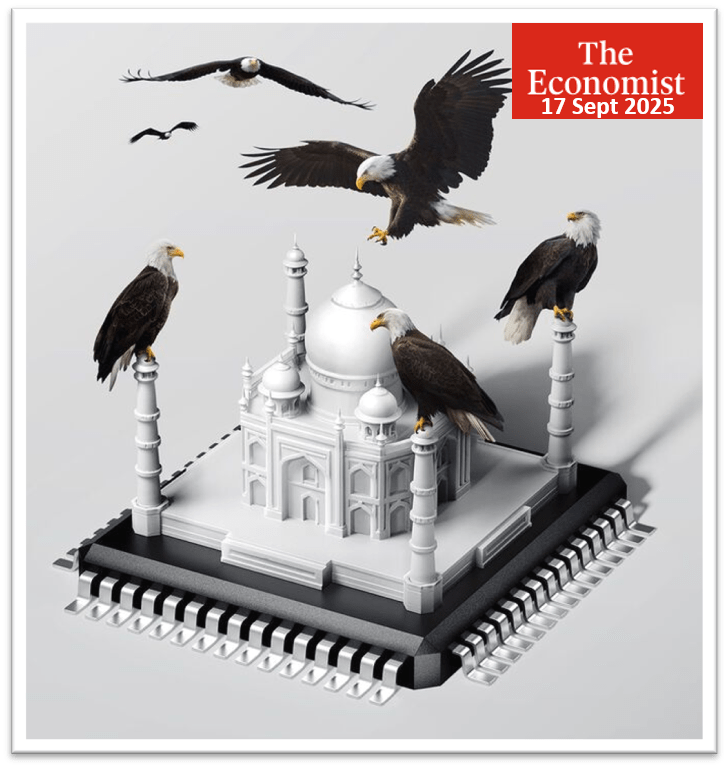
The choice is stark: India can either remain the world’s largest market for AI products—allowing foreign firms to reap the rewards—or emerge as a global leader by building AI on its own terms, tailored to its needs and those of other countries that depend on such services. The contrast between these two paths is vividly illustrated in the images featured in The Economist articles.

Can India take up the challenge?

ZOHO is taking the lead in development of products matching the global toppers— with the right push from the government, India too can rise to the forefront.
Will it become the global leader? Let’s wait and see.


 Stephen Musings
Leave a comment