
Recently Dr. Shashi Tharoor, MP, was a guest speaker at the annual (128th ) Maramon Convention in Kozhencherry ( February 18th, 2023). The main subject of his speech was “Migration: Challenges and Opportunities for Youth.” Migration of Indian youth has become the norm rather than the exception, causing concern in the Indian community. During his address, Dr. Tharoor drew parallels between the Indian youth who migrate and the prodigal son, while trying to explore possible steps to either retain them in India or welcome them back.

There are similarities that we can draw between the parable of the prodigal son and the migrating Indian youth but with some essential differences too.
• In the parable, it was the son who took the initiative, but with Indian youth migration, we often find that it is their parents who take the initiative, selling off or mortgaging their property to raise funds with the dreams of providing better life for their offspring. This has resulted in an estimated $5 billion flowing out of India annually spent by ordinary Indians for the purpose of education and careers. According to a UN report from 2020, India has the world’s largest migrant population, with 18 million of Indian origin living outside of their homeland.
• The son in the parable was called ‘prodigal’ only because he was a reckless spendthrift and lost all his money unlike our migrants in this case. A good number of the migrants are doing very well, leading a better life, and making their fortunes, in conducive environments. So, we cannot label all migrants prodigal; it is their actions that decide the meaning of this tagline.
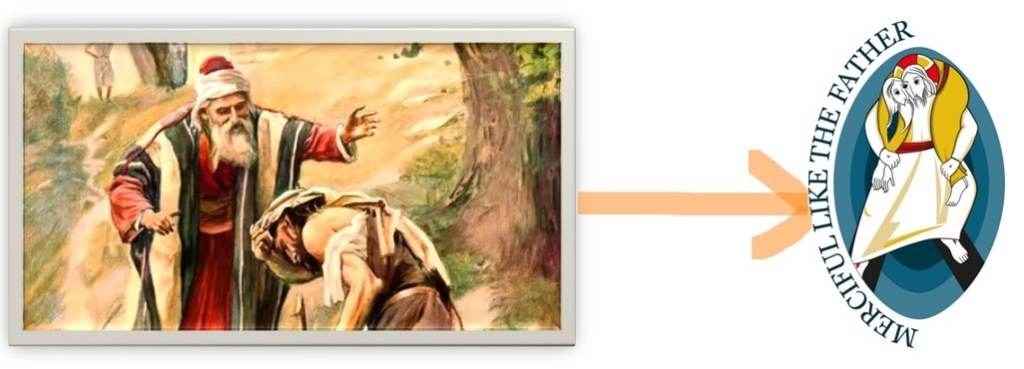
• India has shown mercy to its migrants in times of need, much like the father in the parable. Two recent examples include the Vande Bharat Mission, which brought back 6.76 million Indians from abroad, including 1.41 million to Kerala, during the COVID-19 pandemic. In addition, Operation Ganga evacuated 20,000 Indians, including 18,000 students, (2320 from Kerala) at the 2022 Russian invasion of Ukraine.
• In the parable, the son only decides to return home after he has lost all his fortunes due to his extravagant lifestyle and when famine strikes the country where he had migrated. It is only then that he realizes that his father’s servants are better off than he is. Similarly, Indian migrants may choose to return home when India becomes socially and economically better than the country they migrated to (Will that happen any time in the near future?). India was historically the wealthiest country in the world, but it suffered numerous invasions from the outside and in the so called “colonial era” European powers such as the Dutch, the Portuguese, the French, and the English, took over. They did make fortune out of India’s colonization and left India impoverished. However, India is now on the path to reclaiming its past glory, and there are positive indicators, such as:
* Despite the global recession caused by the pandemic and the Ukraine war, India remains stable with no signs of such a downturn.
* In fact, India has surpassed the United Kingdom and is now the fifth largest economy in the world, while also claiming to be the fastest-growing economy as per specified indicators.
*A recent study by McKinsey Global Institute found that certain regions in India, such as Kerala, have achieved a level of well-being (health+wealth) comparable to that of developed countries.
*According to EY’s predictions, India’s future appears promising as its per capita income is estimated to reach $15,000 by 2047, which is six times higher than the current figure.
*According to the latest report by Goldman Sachs, India and China are predicted to surpass the US in terms of economic power by 2075.
*India’s non-alignment policy, established by its founding fathers, has helped the country gain geopolitical power, which is evident from India’s neutral stance in the current impasse between the Western and Eastern blocs.

? A hypothetical and probable scenario is that India’s development could tempt migrants to return. The question remains, when will this occur? It is an open question.
? The more significant question that arises is whether the siblings who were left behind in India will welcome the returning migrants with open arms?
? The world is transitioning towards a borderless state, where the significance of nationalism and belongingness is diminishing. This raises a fundamental question: will the next generation of ‘prodigal sons’ seek new horizons on space stations, the Moon, Venus, Saturn, or other celestial bodies?
Our predictions are vulnerable to being overturned by the unfathomable potential of the future.

 Stephen Musings
Leave a comment